Health Risks of Chlorine in Drinking Water and How to Stay Safe
Chlorine is commonly used to keep drinking water safe by killing harmful germs. Chlorine in drinking water can also pose health risks when consumed regularly over time.
Many people don’t realize that while it cleans water, it can react with other particles to create harmful byproducts. These byproducts may affect your health in ways you might not expect.
If you live in Barrie, Orillia, or Richmond Hill and rely on local water sources, understanding these risks can help you make safer choices for your home and family. It’s especially important to know how chlorine affects your drinking water if you use a well or lake pump at your home or cottage.
What Is Chlorine and Why Is It Used in Drinking Water?
Chlorine is a common chemical added to drinking water to keep it safe and clean. It helps kill harmful germs and bacteria that can cause illness.
The way chlorine is added and monitored ensures the water you use in your home meets safety rules and stays free from dangerous contaminants.
Purpose of Chlorine in Water Treatment
Chlorine mainly kills bacteria, viruses, and other microbes in drinking water. Without chlorine, these germs could grow and make the water unsafe to drink.
This is especially important in places with lakes, wells, or rivers as water sources. Besides killing germs, chlorine also stops bacteria from growing inside water pipes and storage tanks.
This helps prevent waterborne diseases and keeps the water fresh as it travels from treatment plants to your tap.
How Chlorine Is Added to Water Supplies
Water treatment plants add chlorine in small, controlled amounts. This usually happens after the water is cleaned of dirt and pollutants but before it reaches your home.
Common methods to add chlorine include liquid chlorine, chlorine gas, or solid forms like chlorine tablets. Operators carefully monitor these methods to add just enough to kill germs but not so much that it affects the water’s taste or smell.
Chlorine Residuals and Regulations
Water systems must keep a small amount of chlorine, called a chlorine residual, in the water as it moves through pipes. This leftover chlorine helps prevent new germs from growing before the water reaches you.
Regulations in Canada set limits on how much chlorine can be in drinking water to protect your health. Water providers regularly test chlorine levels to make sure they stay within these safe limits.
| Chlorine Aspect | Details |
|---|---|
| Purpose | Kill germs and prevent bacterial growth |
| Addition Methods | Liquid, gas, tablets |
| Residual Importance | Stops germ growth during distribution |
| Regulation Focus | Safe chlorine limits to protect health |
Immediate Health Risks of Chlorine in Drinking Water
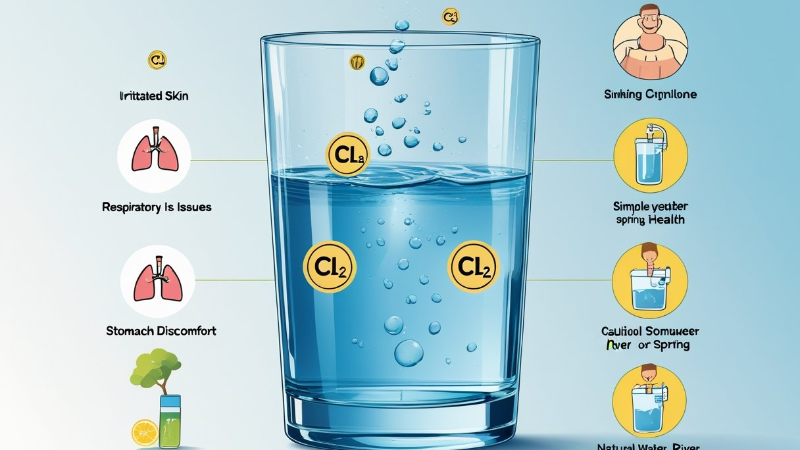
Chlorine in drinking water can cause several health issues right after exposure. These include poisoning symptoms, irritation to your skin and eyes, and problems with breathing.
Chlorine Poisoning Symptoms
If you drink water with too much chlorine, you might feel sick fairly quickly. Common signs include stomach pain, nausea, vomiting, and sometimes diarrhea.
These symptoms happen because chlorine can irritate your digestive system. In severe cases, you may experience headaches, dizziness, or confusion.
These are signs that chlorine levels are too high in your body. If you or anyone in your home shows these symptoms after drinking tap water, seek medical help immediately.
Skin and Eye Irritation
Chlorine can cause redness and itching on your skin, especially if you have sensitive skin or a rash. Bathing or washing with chlorinated water can make these problems worse.
You might notice dry or flaky skin after regular contact. For your eyes, chlorine can cause burning, redness, or watering.
These symptoms usually happen if chlorinated water splashes into your eyes. Wearing protective glasses during home plumbing work or swimming in treated water can help you avoid irritation.
Respiratory Reactions
Breathing in chlorine vapours from tap water can cause coughing, throat irritation, and shortness of breath. These issues are more common if you use hot water, as heat increases chlorine’s evaporation.
People who have asthma or lung problems may feel these symptoms more strongly. If you notice wheezing or tightness in your chest after showering or cleaning, consider using a water filter that reduces chlorine levels.
Long-Term Health Effects of Chlorine Exposure
Chlorine in drinking water can have lasting effects on your body. Some risks involve cancer, your digestive system, and your immune response.
Potential Cancer Risks
Chlorine itself is not directly linked to cancer, but when it reacts with organic matter in water, it creates by-products called disinfection by-products (DBPs). These include chemicals like trihalomethanes (THMs) and haloacetic acids (HAAs).
Studies show that long-term exposure to these by-products may increase the risk of bladder and colorectal cancer. The level of risk depends on how much and how often you consume chlorinated water.
You can reduce your exposure by using water filters made to remove chlorine and its by-products, especially if you rely on well or lake water treatment systems.
Impact on Digestive Health
Drinking water with chlorine and its by-products can irritate your digestive tract. Some people report stomach pain, nausea, and diarrhea after long exposure to chlorinated water.
Chlorine can also harm the good bacteria in your gut. These bacteria are important for digestion and keeping your immune system strong.
A less healthy gut can lead to trouble absorbing nutrients and fighting off illness. If you get your water from a rural supply or a septic system, regular water testing and treatment help keep chlorine at safe levels.
Effects on Immune System
Your immune system can be affected by chlorine exposure over time. Chlorine may cause inflammation, making it harder for your body to fight infections.
Some disinfection by-products might weaken your immune response, especially for children and older adults. This can mean more frequent colds or longer recovery from sickness.
Chlorine Byproducts and Their Health Implications
When chlorine is used to clean your drinking water, it can join with other natural substances to form new chemicals. These are called disinfection byproducts, and some can affect your health over time.
Formation of Disinfection Byproducts
Chlorine reacts with organic matter in water like leaves, dirt, or algae. This reaction creates disinfection byproducts (DBPs), which are different chemicals than chlorine itself.
The amount and type of organic matter in your local water can affect which DBPs form. The two main groups of DBPs you might find are trihalomethanes (THMs) and haloacetic acids (HAAs).
These compounds form when chlorine combines with natural carbon sources. Your water source and treatment process play a big role in how much of these byproducts end up in your tap water.
Risks of Trihalomethanes (THMs)
Trihalomethanes are one of the most common chlorine byproducts in drinking water. They form when chlorine reacts with organic materials.
Long-term exposure to THMs through drinking water has been linked to an increased risk of bladder cancer. Some studies also show effects on the liver and kidneys when high levels are consumed over time.
You might not notice any taste or smell from THMs, but testing water for these compounds is important if you rely on well or lake water systems.
Haloacetic Acids (HAAs) and Health Concerns
Haloacetic acids, or HAAs, are another group of chlorine byproducts. They form during water disinfection when chlorine reacts with natural organic matter.
Like THMs, HAAs can pose health risks if you are exposed to high levels over a long period. Research suggests HAAs may affect your liver, kidneys, and even increase the risk of some cancers if consumed regularly.
Monitoring HAA levels is crucial, especially if you use private water sources or cottage water systems.
Sensitive Populations and Vulnerabilities
Some people are more at risk from chlorine in drinking water due to how it can affect their health. These groups may experience stronger reactions or long-term effects from regular exposure.
Risks for Pregnant Women and Infants
If you are pregnant, chlorine byproducts in water can affect your baby’s development. Studies show that high levels of these byproducts may increase the risk of birth defects or low birth weight.
Infants have smaller bodies and less developed systems, so they absorb chemicals more easily. Their delicate skin and sensitive digestive tracts mean chlorine may cause irritation or digestive upset.
To protect your child, consider using water filters certified to reduce chlorine and its byproducts. Boiling water does not remove chlorine and can concentrate harmful byproducts, so filtration is a better option.
Elderly and Immunocompromised Individuals
If you are elderly or have a weakened immune system, your body may not handle chlorine exposure well. You could be more prone to skin irritation, respiratory issues, or digestive problems caused by chlorine in water.
Long-term exposure to chlorine byproducts can increase the risk of infections because your immune response is weaker. It’s important to use clean water, especially if you rely on well or lake pumps in rural regions.
Using certified filters and keeping regular maintenance on systems like septic tanks or sump pumps can help reduce chlorine risks in your home water supply.
Taste, Odor, and Consumer Concerns
Chlorine in drinking water can change how it tastes and smells, affecting your daily water use. Many people notice these changes right away and may find them unpleasant.
Chlorine’s Impact on Water Taste
Chlorine often gives water a slightly bitter or metallic taste. This can be more obvious in tap water from wells or lakes.
Your taste buds react to chlorine’s chemical nature, which some people find sharp or harsh. The strength of this taste depends on the chlorine level and how fresh the water is after treatment.
If you find the taste unpleasant, simple steps like letting water sit in an open container or using a water filter designed for chlorine removal can make a difference. These options help improve taste without compromising water safety.
Addressing Water Smell Issues
Chlorine in water can cause a distinct smell, often described as "bleach-like." This smell might be stronger in newly treated water or during warmer months when chlorine reacts faster.
You may notice this smell when filling your glass, cooking, or showering. While it usually doesn't signal harmful bacteria, the scent can be off-putting in your home.
Using activated carbon filters or running your taps for a few minutes before use can reduce the smell. Regular maintenance of your plumbing system also helps keep water fresh and free of unwanted odors.
Strategies to Reduce Chlorine Exposure at Home
There are simple ways you can lower the amount of chlorine in your drinking water. These methods help improve the taste and reduce potential health concerns without needing expensive equipment.
Using Water Filters
Using a water filter is a common and effective way to reduce chlorine. Look for filters that specifically remove chlorine, such as activated carbon filters.
These are good at trapping chlorine molecules and improving water taste. You can find a range of filters, from pitchers with built-in cartridges to whole-house filtration systems.
A filter pitcher is an easy, affordable option you can keep in your fridge. Whole-house systems provide filtered water from every tap, which may be better if you want to reduce chlorine in showers or for cooking.
Make sure to change the filter cartridges on time. Filters that are old or clogged won’t remove chlorine well.
Check the product instructions for how often to replace them—usually every 2 to 6 months.
Allowing Water to Stand
You can also reduce chlorine by letting tap water sit out in an open container. Chlorine is a gas that evaporates when exposed to air.
Leaving water to stand for 24 hours can remove a large part of the chlorine. If you need water sooner, boiling it for 15 to 20 minutes also speeds up chlorine evaporation.
Just be aware that boiling won’t remove all chlorine by-products called chloramines, which sometimes require other treatments. Use a clear, wide container to expose more surface area of water to air.
If you use standing water for drinking, keep it covered to avoid dust or bugs but still let chlorine escape. This method is simple but only works well if you plan ahead.
Alternatives to Chlorine for Water Disinfection
You have options if you want to avoid chlorine in your drinking water. Some common alternatives use different methods to kill germs and keep water safe without leaving chemical tastes or by-products.
Ultraviolet (UV) Treatment
UV treatment uses light to destroy bacteria, viruses, and other harmful microbes in your water. When water passes through a UV light chamber, the rays damage the DNA of these organisms and stop them from reproducing or causing illness.
This method does not add chemicals to the water. It also does not change the taste or smell.
UV treatment does not remove minerals, metals, or other particles. You might still need a filter if your water has dirt or rust.
UV systems need electricity and regular maintenance to keep the bulbs working well. They work well for homes with well or lake water, especially in areas like Muskoka or Simcoe County where you want clean water without chemicals.
Ozone Disinfection
Ozone is a gas that kills germs in water by breaking down their cell walls. It works faster than chlorine and can remove some chemicals and bad smells.
Ozone breaks down quickly into oxygen, so it leaves no lasting chemical in your water. This means you won’t get lingering tastes or unwanted chemicals.
Ozone systems often work with filters because ozone alone does not remove particles. They need special equipment and electricity to generate the ozone gas safely.
For cottage water systems or rural homes in York Region, ozone can provide strong disinfection without the issues of chlorine by-products. Regular checks help make sure the system works correctly and safely.
Frequently Asked Questions
You might wonder how chlorine in drinking water affects your health and skin. Safe levels protect you, but knowing symptoms of too much chlorine and long-term effects can help you stay informed.
What are the potential side effects of chlorine in our drinking water?
Chlorine can cause taste and smell issues in water. Some people may experience mild stomach discomfort or irritation of the mouth and throat.
Can chlorine in drinking water affect our skin, and how?
Yes, chlorine can dry out your skin and cause irritation. It may worsen conditions like eczema if your skin is sensitive.
What are the safe levels of chlorine in drinking water according to standards?
Health authorities in Canada set safe chlorine levels at about 4 milligrams per litre. This limit keeps the water safe to drink while controlling bacteria.
Are there any long-term health effects associated with consuming chlorinated water?
Long-term effects are not common at safe chlorine levels. Some studies suggest a link between chlorinated water and certain health risks, but these are usually linked to byproducts, not chlorine itself.
What symptoms might indicate an excessive amount of chlorine in drinking water?
If your water tastes very strong or smells like bleach, it might have too much chlorine. You might also notice skin dryness, eye irritation, or upset stomach.
Is it necessary to remove chlorine from our drinking water for safety reasons?
In most cases, no. Chlorine keeps water safe by killing germs.
If the taste or smell of chlorine bothers you, you can use filters to reduce it.