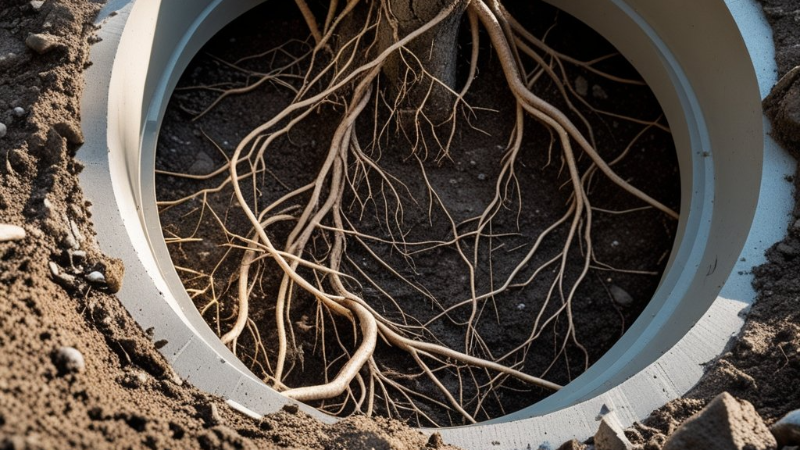
Tree Roots Causing Drain Clogs: How to Spot and Fix the Problem Quickly
If you've noticed slow drains or recurring clogs in your home, tree roots could be the reason. Tree roots grow toward the moisture in your pipes and can block or damage your drain system.
These blockages can cause water to back up, slow drains, or even pipe damage if not addressed quickly. You might spot soggy spots in your yard or sinkholes near underground pipes, which often signal root intrusion.
Large View Plumbing & Heating can spot these problems early and offer solutions to keep your drains flowing. Knowing how tree roots cause clogs and what you can do helps you protect your home’s plumbing.
How Tree Roots Cause Drain Clogs
Tree roots can invade your drain pipes in surprising ways. Their growth patterns and the way your drains are built make them easy targets.
Understanding this helps you spot problems early and protect your plumbing.
How Roots Invade Pipes
Tree roots naturally look for water and nutrients. Your sewer and drain pipes carry moisture, making them attractive to roots.
When pipes have small cracks or loose joints, roots can slip inside. Once inside, roots grow and spread, trapping debris and dirt.
They form blockages that slow your drains. Sometimes, roots break pipe walls, causing leaks or breaks.
Roots are always searching for water, so they can cause damage over time if not stopped.
Growth Patterns of Tree Roots
Roots grow outward and downward in search of water. They can extend far from the tree and reach pipes many feet away.
Your drain pipes often run underground, close to tree roots. Roots enter pipes through tiny openings.
Inside, they take advantage of drains' moisture and nutrients and grow faster. Their dense network inside the pipes blocks water flow and stops debris from passing through.
This slow build-up leads to recurring clogs that are tough to clear without professional help.
Why Drains Are Vulnerable
Drains are often made of materials like clay, cast iron, or old plastics, which can crack over time. Tree roots are strong enough to push into these weak spots.
Older pipes and joints are especially at risk. Your drains may lie near large trees or mature landscaping, increasing the chance of root problems.
Roots sense even the smallest leak or moisture and target those spots. Regular inspections by professionals like Large View Plumbing & Heating can catch early signs before big problems form.
Common Signs of Root-Related Drain Blockages
When tree roots invade your pipes, they can cause several noticeable problems in your plumbing system. These signs often show up in your daily use, like slow drains or strange noises.
Recognizing these issues early can save you time and prevent bigger damage.
Slow Draining Fixtures
If your sinks, showers, or tubs drain slowly, tree roots could be the cause. Roots grow into tiny cracks or joints in underground pipes and block the flow of water.
At first, the drain might only slow down, but over time, the blockage can get worse. Slow drains caused by roots often happen in multiple fixtures at once.
For example, your kitchen sink and bathroom tub might both drain sluggishly. This is because roots often block main lines, affecting several spots in your plumbing.
You should act quickly because slow drains can lead to backup and overflow. Large View Plumbing & Heating recommends checking with a professional if you see consistent slow draining that doesn’t clear on its own.
Unusual Gurgling Sounds
Strange noises from your drains, like gurgling or bubbling, often mean roots block your pipes. These sounds happen because trapped air struggles to pass through the obstructed pipes.
You might hear gurgling when flushing your toilet or running water elsewhere in the house. It’s a sign that the flow of wastewater is interrupted.
Ignoring these sounds can lead to more serious clogs and even pipe damage. If you hear persistent gurgling, it’s a good idea to get an expert from Large View Plumbing & Heating to inspect your system.
They use special cameras to see inside pipes and find the exact problem spot.
Recurring Clogs
Clogs that keep coming back, despite clearing them, strongly suggest tree roots have taken hold inside your pipes. Even if a drain seems clear after a quick fix, roots continue to grow and cause repeat blockages.
Recurring clogs often affect outdoor drains, toilets, and basement plumbing where roots can easily reach underground pipes. The scratchy texture of roots inside pipes can catch debris, making blockages worse over time.
Addressing recurring clogs usually requires professional root removal and pipe repair. Specialists like those at Large View Plumbing & Heating offer trenchless solutions that remove roots without digging up your yard.
This kind of treatment takes care of the root cause and prevents future problems.
Types of Trees Most Likely to Cause Drain Problems
Some trees have root systems that grow fast and spread wide. Others grow near underground pipes, making your drains more likely to get clogged.
Knowing which trees pose the biggest risk can help you avoid costly damage.
Species with Aggressive Roots
Certain trees have roots that grow aggressively to find water and nutrients. These roots can easily invade pipes and drains.
The most common culprits include:
- Willows: Known for fast and wide root spread.
- Figs: Their roots can reach pipes far from the tree.
- Eucalypti: Deep-rooted and strong enough to crack pipes.
- Liquidambars: Roots spread extensively close to the surface.
- Jacarandas: Known for penetrating sewer lines.
These tree roots can squeeze into small pipe cracks or joints. Over time, they cause blockages or even break pipes.
If you have these types of trees near your home, watch for signs of slow drains or backups.
Trees Near Sewer Lines
Any tree planted close to your sewer or drainage pipes poses a risk. Roots naturally grow toward moisture, so sewer lines become attractive targets.
You might not see the problem until drains start clogging. If your yard has mature trees near underground pipes, consider mapping where the pipes run.
You can ask a plumber from Large View Plumbing & Heating to help identify these routes. Early detection helps prevent root intrusion.
Planting trees like oaks, maples, or pines away from sewer lines reduces the chance of root damage. When you plant near pipes, regular plumbing inspections can catch root growth before serious clogs happen.
Short-Term Solutions for Tree Root Drain Clogs
When tree roots invade your drains, you need fast ways to clear the blockage and get water flowing again. There are chemical and mechanical methods to remove roots temporarily until a lasting fix is possible.
Using Root-Killing Chemicals
Root-killing chemicals can help stop roots from growing inside your pipes. They usually contain copper sulfate or an herbicide that travels through the pipes and kills roots without harming the tree above ground.
You pour the chemical into a drain or toilet and let it flow to the affected area. This kills the roots inside the pipe but leaves the rest of the root system intact, so the tree can still live.
These treatments work best for minor root invasions or when you want to slow root growth. Chemicals won’t remove large root masses stuck inside pipes, so you may still need a professional to clear heavy blockages.
Mechanical Root Removal
Mechanical removal uses special tools like motorized cutters, augers, or rooter machines to physically cut and break up roots clogging your drain. A plumber feeds the device into the pipe, and rotating blades slice through roots and clear the way for water.
This method can quickly open blocked pipes but doesn’t stop roots from coming back. After cutting the roots, you’ll need regular maintenance to keep pipes clear.
Large View Plumbing & Heating offers skilled mechanical root removal with modern equipment. Their team can inspect your pipes and choose the right approach to protect your home from repeated clogs caused by invasive roots.
Long-Term Prevention Methods
Stopping tree roots from clogging your drains takes smart, lasting solutions. Two reliable methods can protect your pipes for years: fixing damaged pipes with new lining or replacement, and installing root barriers to keep roots away.
Pipe Lining and Replacement
If your drains are already damaged or old, pipe lining offers a strong defense. This method uses a resin-coated liner inserted into the pipe, which hardens and creates a new, smooth pipe inside the old one.
It seals cracks and gaps where roots sneak in. Pipe lining is less disruptive than digging up your yard because it’s mostly done underground with special technology.
When lining isn’t enough, replacing old, cracked pipes is the next step. New pipes made from root-resistant materials help keep roots out and avoid future blockages.
Large View Plumbing & Heating uses modern trenchless technology for lining and replacement to get your pipes fixed faster with less mess.
Root Barrier Installation
Root barriers are physical or chemical lines placed in the soil near your pipes. Their job is to stop roots from growing toward your drains.
These barriers can be made from durable materials like metal or plastic. Installing barriers around your pipes creates a safe zone that roots won’t cross.
This protects your drains without harming nearby trees or plants. Proper placement is key.
A professional team will map your pipes and place barriers at the right depth and distance to stop roots while keeping your landscaping healthy. Large View Plumbing & Heating can help install root barriers in your North Shore home, combining this with other solutions for the best protection against root clogs.
Professional Help for Tree Root Drain Clogs
If you notice slow drains or strange noises from your pipes, act quickly. Proper inspection and timely action can stop tree roots from doing serious damage to your plumbing.
When to Call a Plumber
Call a plumber if you see signs like slow drainage, repeated clogs, or gurgling sounds in your toilets and sinks. These often mean roots have entered your pipes.
If you notice foul smells or even small sinkholes near your drain lines, it’s time to get professional help. Ignoring these problems can lead to bigger issues, such as burst pipes or costly repairs.
A company like Large View Plumbing & Heating has the right tools and experience to handle root-related clogs safely. A quick call can save you time and money in the long run.
Inspection and Assessment Options
Plumbers use different methods to check how bad the root problem is. One common way is a video camera pipe inspection.
This lets them see inside your pipes to find root invasion or other damage clearly. With this information, they can decide on the best fix, like cutting out roots or repairing pipes without digging up your yard.
Professionals at Large View Plumbing & Heating can perform these inspections and suggest the right approach. Early treatment stops the problem from getting worse.
Potential Damage from Untreated Root Clogs
Ignoring tree roots growing in your drains can cause serious problems inside your pipes and around your home. These blockages often lead to broken pipes and flooding that can damage your property.
Knowing what to look for can help you avoid costly repairs.
Drain and Sewer Line Damage
Tree roots are drawn to the water and nutrients in your sewer lines. As they enter through tiny cracks, they grow inside the pipes and make the openings worse.
Over time, roots can break pipes or cause them to collapse. This damage can cause leaks and backup, slowing or stopping the flow of wastewater.
If left untreated, you may face high repair costs to replace broken or crushed pipes. Large View Plumbing & Heating uses trenchless technology to fix damaged pipes with less digging and mess, saving you time and money.
Property Flooding Risks
When roots clog your drains, water can't flow properly and may back up into your home. You might notice water pooling in sinks, toilets, or even basement floors.
This flooding can damage floors, walls, and furniture. Blocked pipes also increase the chance of sewer spills.
These leaks are costly to clean and can cause health risks from exposure to sewage. Acting quickly to remove root clogs reduces the chance of water damage and keeps your home safer.
Large View Plumbing & Heating can help clear blockages before they cause flooding or structural damage.
Choosing the Right Solutions for Your Situation
When tree roots invade your drains, the best solution depends on how severe the problem is and how your pipes are laid out.
For minor clogs, use simple root removal methods like snaking or hydro jetting. These can clear blockages without digging up your yard.
These methods work well when roots are just starting to invade.
If roots have caused bigger damage, such as cracks or broken pipes, you may need pipe repair or replacement.
Trenchless pipe repair often fixes pipes without major digging. This method saves time and keeps your yard looking nice.
Think about prevention after clearing your drains. Regular inspections help catch root growth early.
Plant trees farther from your septic system and pipes to lower the risk of future problems.
Large View Plumbing & Heating in North Shore, Massachusetts, offers expert advice and modern solutions for root-related issues.
With over 10 years of experience, they tailor their approach to your needs, balancing effectiveness and cost.
Here’s a simple checklist to help you decide:
| Problem Severity | Recommended Solution | Benefits |
|---|---|---|
| Minor root intrusion | Snaking or hydro jetting | Quick, non-invasive |
| Moderate damage | Root cutting + pipe inspection | Clears roots and checks pipes |
| Major pipe damage | Trenchless pipe repair/replacement | Saves yard, long-lasting fix |
Maintenance Tips for Preventing Root Intrusion
Regular maintenance keeps your drains clear of tree roots. Inspect your pipes at least once a year.
Watch for slow drains or gurgling sounds, which may signal root intrusion.
Clean your drains regularly. Professional drain cleaning services can remove small roots before they grow and cause clogs.
Plant trees carefully. Plant trees at least 10 feet away from your sewer lines to reduce the risk of roots reaching your pipes.
Install root barriers to block roots from growing toward your pipes.
If you suspect root intrusion, call a trusted plumber. Large View Plumbing & Heating in North Shore, Massachusetts, offers expert inspection and removal services.
Their team uses modern tools to clear roots without digging up your yard.
Here’s a simple checklist to protect your pipes:
- Inspect pipes yearly
- Clean drains regularly
- Plant trees far from pipes
- Use root barriers
- Call experts if you suspect problems
Frequently Asked Questions
Tree roots can break into pipes and create blockages. Spotting these issues early and acting quickly saves you time and money.
How can I tell if tree roots have clogged my drains?
Slow or gurgling drains may signal root clogging. Soggy spots or sinkholes in your yard can also point to root damage underground.
A plumber can use a camera inspection to check inside your sewer lines and confirm if roots are causing the problem.
What can be done to prevent tree root intrusions in my pipes?
Plant trees at least 20 to 30 feet away from sewer lines when possible. Avoid planting species with aggressive root systems near your pipes.
Regular pipe inspections and prompt repairs of any cracks keep roots out of your drainage system.
Are there any warning signs of root-caused clogging before it becomes severe?
Slow drains and strange smells in your yard can be early warning signs. You might also notice your toilet or sinks backing up.
Early detection makes treatment easier and limits damage to your pipes.
Is it safe to use chemicals to kill tree roots in my drains, and what are the alternatives?
Chemical root killers can harm your pipes and the environment. Mechanical root removal methods like hydro jetting or root cutting work better.
Large View Plumbing & Heating recommends professional treatment to protect your plumbing and yard.
What are the long-term effects of tree roots on drainage systems?
Roots can crack or collapse pipes over time, causing leaks and major blockages. This leads to costly repairs and can damage your property.
Who should I contact if I suspect tree roots are clogging my drains?
Call a licensed plumber who offers drain inspections and root removal services.
The team at Large View Plumbing & Heating in North Shore, Massachusetts, has the tools and experience to find and fix root blockages safely.