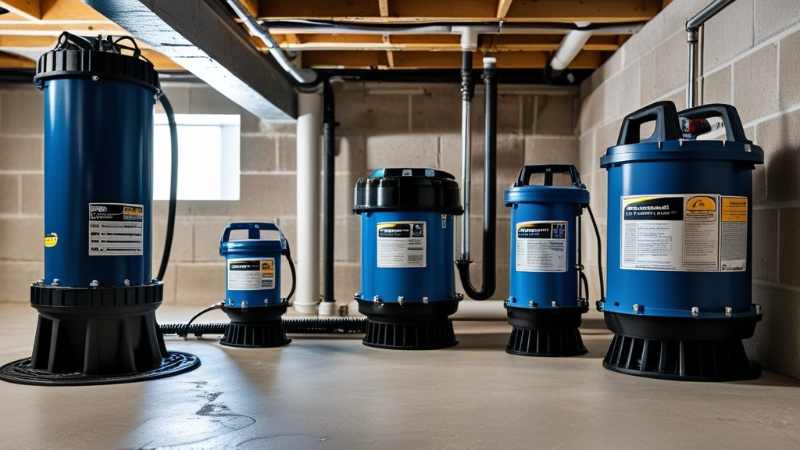
What Size Sump Pump Do I Need To Keep My Basement Dry Easily
Picking the right size sump pump really matters if you want to keep your basement dry and your home safe from flooding. The ideal size depends mostly on your sump pit and how much water you expect during big storms or snowmelt. Too small, and it just can’t keep up. Too big, and you’re wasting money and power for no reason.
Don’t forget to factor in where your home sits and what your drainage looks like. In places like Aurora, Richmond Hill, and Stouffville, weather can swing a lot. At Harris Plumbing, we’ve helped a lot of folks figure out the right pump size for their homes. If you get the basics, you’ll save yourself a lot of headaches and cash down the road.
Understanding Sump Pump Sizes
The right sump pump size comes down to how much water you need to move and how fast you need it gone. The power and type of pump you pick affects how well it deals with flooding or heavy water flow. If you know what you’re up against, you can choose a pump that’s actually up to the task.
What Does Sump Pump Size Mean?
When folks talk about sump pump size, they’re usually talking about how much water the pump can move—measured in gallons per minute (GPM) or litres per minute (LPM). That’s your speed limit for getting water out of your basement or crawl space.
If you get a pump with a higher flow rate, it’ll move more water in less time. That’s a big deal if you’ve got a high water table or you get hammered by rain. Sump pit size and basement depth matter too.
Floods a lot? Big basement? Go bigger with the pump. Smaller, drier spaces? You can get away with a smaller one—as long as it keeps up with the water.
Horsepower Ratings Explained
Horsepower (HP) is just the motor’s muscle. Most home sump pumps fall between 1/4 HP and 1 HP. More horsepower means more water moved, and it can push water higher if it needs to.
A 1/4 HP pump is enough if your basement is small and you don’t get much water. If your basement is deep or you get a lot of water, 1/2 HP or 3/4 HP is usually a better bet.
But don’t go overboard—too much horsepower just burns more electricity and wears out the pump faster. Harris Plumbing can help you match horsepower to your actual needs, especially with Ontario’s wild weather.
Types of Sump Pumps
You’ve got two main choices: submersible or pedestal. Submersible pumps sit right in the sump pit and are waterproof. They’re usually quieter and pack more punch for deep pits.
Pedestal pumps keep the motor above the pit, connected by a pipe. They’re easier to work on, but louder and take up more room.
Which one’s right? Depends on your basement size, how much noise you can stand, and how much space you have. For cottages or seasonal homes in places like Aurora, Richmond Hill, and Stouffville, submersibles are popular because they’re tough and quiet.
Both types come in different horsepower and flow rates. If you’re not sure, Harris Plumbing can help you sort it out for your property.
Key Factors That Affect Sump Pump Size
Your sump pump size should match your home’s unique needs. Think about the space you need to drain, how much water you might get, and how far the pump needs to push that water. These details help you avoid wasting energy or risking a flood.
Basement or Crawl Space Size
The bigger the area, the more water you’ll have to move. Measure your square footage and consider how deep water could get during a downpour or spring melt.
A bigger space needs a pump with a higher GPM. For instance, a tiny crawl space might be fine with a 1/3 HP pump, but a big basement could need 1/2 HP or more. Harris Plumbing suggests matching pump size to your space for real flood protection.
Water Table and Flood Risk
The water table under your house shifts with the seasons and local weather. If you’re in a spot with a high water table or lots of flooding—pretty common in parts of Barrie, Orillia, and Aurora, Richmond Hill, and Stouffville—your pump has to work harder.
Higher water tables mean water fills your sump pit faster. If you get sudden heavy rain or fast snowmelt, you might need a stronger pump or even a backup. Know your risk so you don’t end up with a pump that’s too weak.
Discharge Distance and Elevation
How far (and uphill) your pump has to push water matters. A long or steep discharge line means you’ll need a pump with more muscle.
Say your pump needs to move water 30 feet away at ground level—a standard pump can probably handle that. But if you’re going uphill or up a story, you’ll need more horsepower or a higher flow rate. This keeps water from backing up near your foundation.
If you’re not sure how much power you need, local experts like Harris Plumbing can help you figure it out.
How to Calculate the Right Sump Pump Size
You want a sump pump that keeps your basement dry without running up your power bill. That means you need to know how much water comes into your sump pit and pick a pump that can handle it—no more, no less.
Measuring Water Inflow Rate
First, figure out how much water pours into your sump pit during a heavy rain. Try timing how long it takes to fill a 10-litre bucket with the water flowing in.
Now, you know the volume and the time it took. That’s your inflow rate—the amount of water your pump needs to move to avoid flooding. Check this during a real storm or when the ground’s soaked. Weather in Barrie, Orillia, and Muskoka or cottage country can throw you curveballs, so keep that in mind.
Calculating Required Gallons Per Minute
Convert your inflow to gallons per minute (GPM). Just divide the number of gallons by the minutes it took to fill your test container.
Most home sump pumps move 30–50 GPM, but you need to match this to your actual inflow. If you measure 40 GPM, get a pump rated a bit higher to handle sudden downpours. Don’t forget to factor in how high the pump has to lift the water—the higher the lift, the harder the pump works. Harris Plumbing usually recommends sizing a pump for your home’s real-world needs.
Using Sump Pump Sizing Charts
Sizing charts are handy. They show you which pump size matches your inflow and lift needs.
Here’s a quick example:
| Pump HP | Max Flow (GPM) | Max Lift (feet) |
|---|---|---|
| 1/4 HP | 30 - 40 | 10 |
| 1/3 HP | 40 - 50 | 12 |
| 1/2 HP | 50 - 70 | 15 |
Match your numbers to the chart and pick a pump that covers both flow and lift. Not sure? A licensed journeyman plumber at Harris Plumbing can help you sort it out for your place in Simcoe County or York Region.
Choosing Between Submersible and Pedestal Models
You’ve got to pick a sump pump that fits your basement or cottage setup. The right model depends on how often you use it and how much space you’ve got. Both submersible and pedestal pumps get the job done, but each has its perks.
Performance Differences
Submersible pumps live down in the sump pit, totally underwater. They run quieter and don’t overheat as easily. Because they’re underwater, they move water out more efficiently and last longer since the motor stays nice and cool.
Pedestal pumps keep the motor up above the pit. They’re louder, but you can get to the motor for repairs. They don’t last as long if you use them a lot, since the motor’s exposed and can get hot.
Best Applications for Each Type
Deep or tight sump pit? Go with a submersible. It stays out of the way and can handle more water—great for homes or cottages where rain or snowmelt hits hard.
Pedestal pumps make sense if you want easy maintenance and have space above the pit. They’re fine for places with less frequent water problems or wide, shallow basins.
If you’re stuck deciding, Harris Plumbing’s licensed journeymen can help you pick what works best for local conditions.
Common Sump Pump Size Recommendations
The right sump pump size depends on your water flow and how often you deal with heavy rain. You want enough capacity to keep your basement dry, but not so much you’re burning money.
Standard Home Installations
Most homes in Simcoe County or York Region are fine with a 1/3 to 1/2 horsepower (HP) pump. That usually covers typical water flow for basements with average seepage.
Check your sump pit size and how deep water can get. A pump that moves about 2,000 to 3,000 gallons per hour (GPH) at a moderate lift is often enough.
Bigger basement or more rain? You might need a stronger pump. Harris Plumbing recommends testing your system every year to make sure your pump keeps up with your basement and local weather.
Commercial or High-Volume Needs
If your place gets a ton of water—think rural Muskoka cottages or commercial spots—you’ll want a higher capacity pump. Look at 3/4 HP or 1 HP (or more) for big jobs.
Search for pumps that move 4,000+ GPH and handle higher lifts, since water might need to go several meters away.
Bigger pumps mean better flood protection during storms or power failures. It’s smart to have a backup or battery-powered pump if outages are common. Harris Plumbing can help you pick a solid pump for your heavy-duty needs.
Mistakes to Avoid When Sizing Your Sump Pump
Getting the right sump pump size is key to keeping your basement or cottage dry. Don’t fall into the usual traps—they can leave you with floods or wasted cash. Pay attention to your water needs, future plans, and how your pump gets power.
Underestimating Your Needs
Go too small, and your pump just won’t keep up after a big storm or snowmelt. That’s how you end up with water damage. Figure out how much water your sump pit collects and how fast it needs to be pumped out. It’s smarter to go a little bigger than risk a flood.
Don’t just look at the average rainfall—think about those wild storms in Aurora, Richmond Hill, and Stouffville. Harris Plumbing suggests you factor in your basement size and the soil around your house. Clay soil holds more water and needs a beefier pump.
Ignoring Future Growth
Your needs can change. Planning to finish the basement or add a workshop? That’s more water to deal with. If you don’t upgrade your pump now, you might be stuck replacing it sooner or dealing with leaks later.
If you’re in an area where storms are getting worse, your pump needs to keep up. Don’t just buy for today—think ahead. A slightly larger pump now might save you from a frantic call to Harris Plumbing down the line.
Overlooking Power Source Compatibility
Your sump pump really needs the right power source or you’re asking for trouble. If you pick a pump that doesn’t match your home’s electrical system, you could be left high and dry—well, actually, wet—when you need it most. Most sump pumps run on standard 110-volt outlets, but if your setup’s out at a cottage or somewhere remote, you’ll probably want a backup plan.
Battery backup pumps? Pretty much a must if you’re in an area that loses power a lot—think rural York Region or those lakeside cottages. Without one, a storm knocks out the power and your pump just sits there while water creeps in. Ask yourself: can your sump pump hook up to a generator or battery system? If you’re out of town, that’s something to check.
Using the wrong power source doesn’t just risk your basement—it can void warranties or even fry your equipment. Double-check compatibility before you plug anything in, or you might end up calling for repairs sooner than you’d like.
When to Upgrade or Replace Your Sump Pump
Deciding when to upgrade or swap out your sump pump can save you from a nasty, expensive mess. Keep an eye on how much water your pump handles and how long it’s been working for you. Maintenance matters, too—it’s not glamorous, but it makes a difference.
Signs Your Pump Is Too Small
Does your sump pump run non-stop every time there’s a heavy rain? That’s a red flag—it’s probably too small for what you need. Small pumps just can’t keep up when water pours into your basement or crawl space. Maybe you’ve spotted water pooling by the walls or noticed it drains way too slowly.
Another thing: if your pump keeps turning on and off but water still isn’t leaving fast enough, it’s working too hard and will wear out faster. Folks in Barrie, Orillia, and Newmarket, where there’s tons of rain or snowmelt, might need a beefier pump. It’s worth double-checking your pump’s capacity against your basin size and water flow. If you’re not sure, Harris Plumbing can test your setup and point you to the right size.
Longevity and Maintenance Considerations
Most sump pumps last somewhere between 7 and 10 years, but if you check on them regularly, you might squeeze out a bit more life. Clean out the sump pit and give the pump a look every few months. Watch for rust, cracks, or worn parts—stuff that’ll trip you up later.
If your pump’s over 10 years old, it’s probably time for a new one—ideally with a battery backup. Ontario winters are notorious for power outages, and a backup keeps your basement dry even if the main pump quits. It’s just safer to replace a tired old pump than gamble on it holding out through another storm. Harris Plumbing handles repairs and replacements, so you don’t have to stress about it.
Helpful Resources for Sizing Assistance
Getting the right sump pump size isn’t rocket science, but it does depend on a few things—like how much water you need to move and how high you need to pump it. There are some handy ways to figure this out so you don’t overspend or end up with a dud.
Consulting a Professional
Honestly, talking to a licensed plumber just makes life easier. They’ve seen it all and can measure the water volume and check out your basement or crawl space.
They’ll figure out exactly how powerful your pump needs to be, based on your house, the local water table, and drainage setup. That way you avoid buying a pump that’s way too small or just overkill.
Harris Plumbing does this in Simcoe County and Muskoka. Their journeyman plumbers can take a look and suggest the best size for your place. It saves you time and, honestly, you’ll sleep better knowing your basement’s protected.
Manufacturer Sizing Tools
A lot of sump pump brands offer online sizing calculators or charts. You plug in details—discharge height, pipe size, water volume—and the tool spits out a recommended pump size.
These tools help you understand flow rate (gallons or litres per minute) and pumping head (how high the pump can lift water). Both matter when picking out the right model.
Stick to tools that use Canadian plumbing standards and conditions. Double-check these specs before you buy to avoid headaches and make sure your sump pump does its job right from the start.
Frequently Asked Questions
Choosing the right sump pump size comes down to how much water you need to move and the size of your basement. Knowing the difference in horsepower helps—sometimes you need more muscle, sometimes less.
How do I determine the correct sump pump size for my basement?
Start by figuring out how much water your sump pit collects during a heavy rain. Measure the volume in gallons per hour, then match that to a pump with enough horsepower. If you’re not sure, a licensed plumber can help you nail this down.
What's the difference between a 1/2 hp and a 1/3 hp sump pump?
A 1/2 hp pump pushes water out faster and handles bigger volumes—great for larger basements or places that get a lot of water. A 1/3 hp pump works for smaller spaces with less water to clear out. More power usually means better performance, but it might cost a bit more.
Can you recommend the best sump pump for areas with heavy rainfall?
If you’re somewhere with lots of rain—like parts of Barrie, Orillia, and Muskoka—go for at least a 1/2 hp pump for solid water removal. Submersible pumps with sturdy motors are a popular pick. Harris Plumbing often installs models that fit these needs.
When should I consider a 1 hp sump pump over a less powerful one?
If your basement’s huge or flooding is a real threat, a 1 hp pump gives you the extra oomph. It’s also a good call if your sump pit fills up fast or you need to move water a long way.
Where can I find a reliable sump pump size chart for reference?
You’ll find size charts at most plumbing suppliers and from local plumbers. Harris Plumbing can also share a chart that matches Canadian homes and rainfall—just ask.
What are the advantages of a submersible sump pump?
Submersible pumps actually go right in the sump pit, so you don’t need extra space around them. They tend to run pretty quietly, and let’s be honest, no one wants to hear a pump humming all night. Since the motor stays underwater, it’s less likely to overheat or get damaged, which is a nice bonus. That’s probably why you’ll find them in a lot of Barrie, Orillia, and Muskoka homes—folks just like the peace of mind.