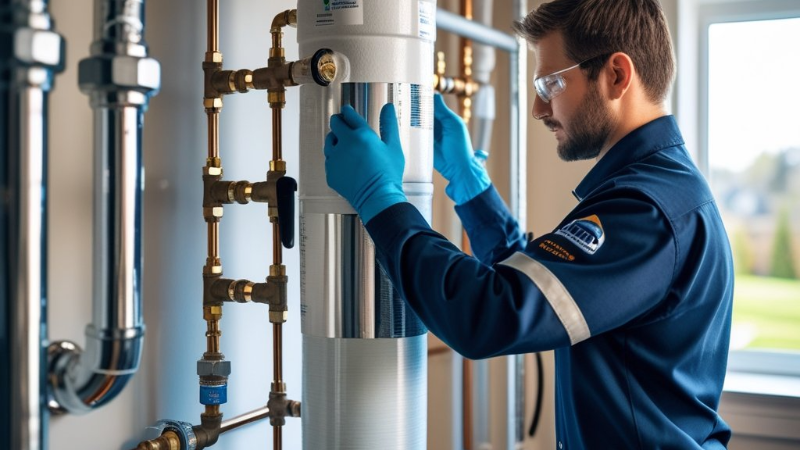
Whole House Chlorine Filter Installation Made Easy for Healthier Water
If chlorine in your water bothers you with a strong smell or taste, installing a whole house chlorine filter can solve that problem for good. A whole house chlorine filter removes up to 99% of chlorine from every tap in your home, giving you cleaner, fresher water for drinking, cooking, and bathing.
This simple improvement can make a big difference in how your water looks, tastes, and feels. Installing this kind of filter doesn’t have to be complicated.
With the right guidance, you can handle the process yourself or choose a trusted professional to help. Large View Plumbing & Heating, with over 10 years of experience serving North Shore, Massachusetts, offers expert installation to ensure your system works well and lasts.
They take pride in quality and customer satisfaction, so your water filtering project is in good hands.
Understanding Whole House Chlorine Filters
A whole house chlorine filter makes sure the water coming into your home is cleaner and safer. It removes chlorine, which can affect water taste, smell, and even your health.
Knowing what these filters are, why chlorine removal matters, and the types of filters helps you choose the right system for your needs.
What Is a Whole House Chlorine Filter
A whole house chlorine filter sits where your main water line enters your home. It treats all the water before it reaches any tap or appliance.
This filter removes chlorine, a chemical commonly used to disinfect water but that can cause bad taste and smell. It also removes some other chemicals and particles depending on the filter type.
The system protects your skin during showers, extends the life of appliances, and improves laundry quality. When professionals like Large View Plumbing & Heating install it, you get steady clean water throughout your house.
Benefits of Removing Chlorine from Water
Removing chlorine improves water taste and smell. This makes it more pleasant for drinking and cooking.
Chlorine can dry out your skin and hair. Filtering it out helps protect your skin’s natural oils.
Chlorine can also damage plumbing pipes and appliances over time. Removing it helps reduce corrosion and scale buildup.
Filtered water is safer for washing clothes, preventing color fading and fabric damage. Reducing chlorine means fewer harmful chemicals in your home, which is important if you have kids, pets, or sensitive skin.
Types of Whole House Chlorine Filters
Activated Carbon Filters
These are the most common. They use carbon media to absorb chlorine and improve taste and odor.
KDF (Kinetic Degradation Fluxion) Filters
These use special media to reduce chlorine and heavy metals. They also prevent bacteria growth inside the filter.
Multi-Stage Filters
These combine activated carbon and KDF, sometimes with sediment filters, to remove chlorine plus other impurities like iron and sediment.
When picking a system, consider your water quality and needs. Large View Plumbing & Heating can help you choose and install the right filter for your home.
Preparing for Whole House Chlorine Filter Installation
Before you start, pick the right filter system, gather all tools and supplies, and find the best spot to install the filter. These steps will make the process smoother and ensure your system works well.
Choosing the Right Filter System
When choosing a whole house chlorine filter, focus on the amount of chlorine in your water and your household water use. Look for filters that remove up to 99% of chlorine and other chemicals like pesticides and VOCs, usually using activated carbon or KDF media.
Make sure the filter’s flow rate matches your home’s water demand so you get clean water without losing pressure. Check the filter size and cartridge lifespan too so you know how often to change it.
You might also want a system that protects your pipes from corrosion. Contacting an expert like Large View Plumbing & Heating can help you select a filter system that fits your home and needs.
Tools and Supplies Needed
To install a whole house chlorine filter, you will need some basic tools and materials. Here’s a quick checklist:
- Pipe cutter or saw
- Wrenches (adjustable or pipe wrench)
- Teflon tape or plumber’s tape
- Pipe fittings and connectors (based on your plumbing type)
- Mounting brackets (if required)
- Screwdriver
- Bucket or towels to catch water
- Safety gloves and goggles
Have these ready to make the job easier. Shut off your water supply before starting to avoid leaks.
Large View Plumbing & Heating recommends checking all your tools and parts ahead of time to avoid delays.
Identifying the Best Installation Location
Pick a spot where the main water line enters your home. This lets the filter clean all the water before it reaches taps, showers, and appliances.
The location should be easily accessible for filter changes and maintenance. Avoid areas that freeze or get very hot, like unheated basements or garages.
Check if there is enough space around the pipes to cut and connect the filter properly. Make sure the spot has a solid mounting surface if the filter needs to be fixed to a wall.
Choosing a good location improves the filter’s performance and makes future service tasks simple.
Step-by-Step Installation Process
Installing a whole house chlorine filter involves careful preparation and clear steps to ensure your water is clean and safe. You need to shut off the water, securely mount the filter, connect it to your main water line, and test for leaks.
Shutting Off Water Supply
Turn off the main water valve to stop water flow. This prevents leaks and lets you work safely.
Open a faucet at the lowest level in the house to drain the pipes. Wear gloves and have towels ready to catch any drips.
Turn off any power to water pumps or heaters near the installation area. This helps avoid electrical hazards.
Mounting the Filter Unit
Choose a strong, easily accessible wall near the main water line for the filter. Use a level to mount the bracket straight so the filter can hang properly.
Drill holes and use strong anchors or screws to support the unit’s weight. The filter housing usually comes with instructions on how to mount it.
Leave space below for easy cartridge changes. A well-mounted filter makes maintenance simple.
Connecting to Main Water Line
Cut a section of the main water pipe where you want the filter. Use a pipe cutter or saw made for your pipe type.
Clean the ends to remove dirt or burrs that could stop proper sealing. Install shut-off valves on both sides of the filter to isolate it during service.
Use Teflon tape on threaded connections to stop leaks. Join pieces with compression fittings or soldering if needed.
Tighten all connections firmly but avoid over-tightening, which can damage fittings.
Testing and Checking for Leaks
After connections, slowly turn the main water valve back on. Watch carefully around joints, valves, and the filter housing for any drips or damp spots.
If you find leaks, tighten the fittings slightly or reseal with Teflon tape. Run water through the filter for a few minutes to clear any air and check full flow.
Large View Plumbing & Heating recommends a thorough leak test to protect your home’s plumbing system and make sure the chlorine filter works right.
Post-Installation Tips and Best Practices
After installing your whole house chlorine filter, keep it running well and check that your water stays clean and fresh. This helps you get the best results and protects your home’s plumbing system.
Regular Maintenance and Filter Replacement
Your filter needs care to work properly over time. Check the filter housing regularly for leaks or cracks.
Most filters should be changed every 3 to 6 months, depending on your water use and the filter type. A clogged or old filter won’t remove chlorine well and can reduce water flow.
Write down the date you install or replace the filter. Set reminders to check or change it on time.
Always use the right filter model recommended for your system. If you’re unsure or need help, contact Large View Plumbing & Heating for advice and service.
Monitoring Water Quality After Installation
Keep an eye on your water’s taste, smell, and appearance after adding the chlorine filter. If the water tastes or smells like chlorine again, or if it becomes cloudy, the filter might not be working correctly.
Use a chlorine test kit to measure how much chlorine remains in your water. Testing regularly, especially after installing or changing the filter, helps catch problems early.
If you notice any strange changes, call a professional to check the filter and plumbing connections to avoid damage or health risks.
Common Installation Mistakes and How to Avoid Them
When installing a whole house chlorine filter, some challenges can affect how well the system works. Pay close attention to size and placement to get clean water without damaging your plumbing or wasting money.
Incorrect Sizing
Choosing the right filter size is critical. If the filter is too small, it won’t handle your home’s water flow properly.
This causes low pressure and forces the filter to work harder, reducing its lifespan. A filter that's too large can be more expensive and waste space.
To avoid this, calculate your daily water use and peak flow rate. Most homes need a filter rated for at least 8-10 gallons per minute for normal use.
If you’re unsure, professionals like those at Large View Plumbing & Heating can help you find the right filter size for your needs.
Improper Placement
Where you put your filter matters a lot. Installing it too close to the water heater can cause heat to damage the filter membranes.
The ideal spot is on the main water line before it splits to the rest of your home’s plumbing. This way, all incoming water is treated before reaching taps or appliances.
Make sure it’s easy to access for regular maintenance like cartridge changes. Avoid tight spaces or places exposed to freezing temperatures.
Large View Plumbing & Heating recommends placing your filter in a cool, dry, and accessible area for the best performance and longest filter life.
Professional Installation vs DIY Options
Choosing between professional installation and doing it yourself for a whole house chlorine filter depends on your plumbing skills and how much time you want to spend. Consider safety, cost, and long-term performance to make the right choice.
When to Hire a Professional
Hire a professional if your home’s plumbing is complex or if you haven't installed water filtration systems before. Whole house chlorine filters involve connecting to the main water line, which must be done carefully to avoid leaks or damage.
Professionals like Large View Plumbing & Heating bring experience and tools to ensure a proper setup. They also handle necessary adjustments and test for system performance.
If you want peace of mind and faster installation, a skilled crew is the best route. If you’re comfortable with basic plumbing and follow clear instructions, simpler models might work for a DIY project.
For first-timers, or when the system requires extra parts or pressure adjustments, professional service saves time and potential headaches.
Cost Considerations
DIY installation can save money upfront because you only pay for the filtration system and parts. However, you may need to buy or rent tools and spend hours learning and working on the install.
Professional installation includes labor costs but may prevent costly mistakes that could damage your plumbing or reduce filter efficiency. Large View Plumbing & Heating offers free consultations to help you understand these costs and find a solution that fits your budget.
Some filters need special placement or extra plumbing work, which raises costs. If you value long-term reliability, professional installation can be more cost-effective by avoiding repairs and ensuring the filter works as intended.
Enhancing Home Water Quality Beyond Chlorine Removal
Improving your home’s water means more than just taking out chlorine. Other pollutants can affect taste, smell, and safety.
Many homeowners look for extra filtering options and ways to combine systems for cleaner, healthier water throughout the house.
Additional Filtration Solutions
Besides chlorine removal, you can add filters that target other common problems like fluoride, lead, sediment, and bacteria. Activated carbon filters help reduce chemicals and improve taste.
Sediment filters catch dirt and rust before they reach your taps. Some systems also remove heavy metals and harmful microorganisms, which protects your family’s health.
You might want to consider a water softener if your water is hard. It reduces calcium and magnesium, which can cause scale buildup in pipes and appliances.
Combining these filters can improve water quality in every part of your home—kitchen, bathroom, and laundry.
Combining Systems for Optimal Results
Using just one filter may not solve all water issues. Many people install a whole house chlorine filter first and then add specialized filters for fluoride, heavy metals, or softening.
Large View Plumbing & Heating can help design and install a system tailored to your home’s water needs. They use modern technology to set up filters that work together without wasting space or energy.
This way, every drop of water you use is cleaner and tastes better. Cleaner water also protects your plumbing and appliances for the long term.
Frequently Asked Questions
Installing a whole house chlorine filter involves clear steps and some regular upkeep to keep your water clean and fresh. You’ll want to know if you can handle the job yourself, how often to change the filter, and what signs show it needs attention.
Also, consider the effects on water flow and trusted product choices.
What are the common steps involved in the installation of a whole house chlorine filter?
First, shut off the main water supply. Then, locate the best spot near your water meter or main line for easy access.
Cut the pipe and place the filter system with proper fittings. Make sure all connections are tight to avoid leaks.
Finally, turn the water back on and check for any drips. You might also set up a prefilter to catch large particles before water reaches the chlorine filter.
This protects the system and extends its life.
Can I install a whole-house chlorine filter myself or should I hire a professional?
If you are comfortable with basic plumbing tools and cutting pipes, you could try installing it yourself. However, mistakes can cause leaks or damage.
For safe and correct installation, it’s often best to hire a professional like Large View Plumbing & Heating. Their team has the experience and knowledge to handle everything smoothly.
How often should I replace the filter in my whole-home chlorine filtration system?
Most whole house chlorine filters need a replacement every 6 to 12 months. The exact timing depends on your water use and local water quality.
If your water has a lot of chlorine or heavy sediment, you may need to change it more often.
What are the signs that my whole house chlorine filter might need maintenance or a replacement?
If you notice a strong chlorine taste or smell coming through your water, check the filter. Other signs include lower water pressure or visible leaks near the unit.
If your skin feels dry after showers or your clothes start to fade faster, the filter may not be working well.
Will installing a chlorine filter affect the water flow rate in my home?
A properly installed and maintained chlorine filter should not cause a major drop in water flow. However, older or clogged filters can slow down the rate.
Replace your filters regularly and choose a system sized for your home’s water demand.
Are there any specific brands or models of chlorine filters recommended for residential use?
When you choose a chlorine filter, look for trusted models that match your home's size and water quality.
Large View Plumbing & Heating can help you pick a system with features like heavy metal removal and long-lasting filters.
Choose filters certified for chlorine reduction to ensure you get clean water.