How Does a Sump Pump Work Explained Simply for Homeowners
A sump pump protects your home or cottage from flooding by removing water that collects in your basement or crawl space. It detects rising water and then pumps it away to a safe location outside your property.
This keeps your space dry and prevents water damage. You’ll often find sump pumps in homes across Ontario, especially in areas like Aurora, Stouffville, or throughout Muskoka.
Heavy rains and melting snow can cause water buildup. Some sump pumps also have a battery backup to keep working during power outages.
What Is a Sump Pump
A sump pump removes unwanted water from areas like basements or crawl spaces. It keeps those spaces dry and helps prevent flooding, mould, or structural damage.
Definition and Purpose
Install a sump pump in a pit or sump basin, usually found in basements or the lowest part of your home. Its main job is to collect excess water from rainfall, groundwater, or plumbing leaks.
When water reaches a certain level, the sump pump turns on automatically. It pushes the water out and away from your home's foundation.
This stops water from pooling inside and damaging your walls, floors, and belongings. In areas prone to heavy rain or flooding, using a sump pump keeps your home safe and dry.
Common Uses
You’ll find sump pumps in basements, especially in places like Aurora, Stouffville, or throughout Muskoka where groundwater rises during spring or heavy rain. They protect homes from basement flooding and reduce the risk of mould and mildew.
Cottages and rural homes use sump pumps to manage water from the natural landscape, nearby lakes, or wells. Many homeowners rely on sump pumps to keep foundations strong and indoor air healthier.
Some sump pumps use water pressure, while others use electricity with battery backup options for power outages. This makes them a reliable defence against water damage.
How a Sump Pump Works
A sump pump moves water from your home's lowest point to a safe area outside. It uses pressure and power to stop water from flooding your basement or crawl space.
Basic Operating Principle
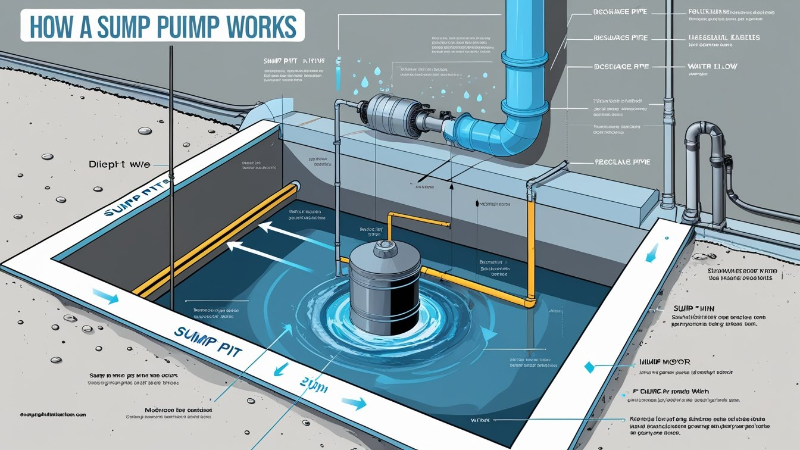
Your sump pump activates when water collects in a pit, usually in your basement. As water rises, a sensor or float switch tells the pump to turn on.
The pump pulls the water out of the pit using your home’s water pressure or an electric motor. It pushes water through a pipe that leads away from your foundation.
When the water level drops, the sensor tells the pump to stop. This automatic cycle protects your home during heavy rain or snowmelt.
Key Components
A sump pump system has a few key parts:
- Sump Pit: A hole where water collects.
- Pump: Usually electric, it moves water out of the pit.
- Float Switch: Detects rising water and activates the pump.
- Discharge Pipe: Carries water away from your house.
- Check Valve: Prevents water from flowing back into the pit.
Each part must work properly to keep your basement dry. If one fails, your home could flood.
Regular checks ensure the pump starts on time and the pipes stay clear.
Types of Sump Pumps
Sump pumps come in two main styles. Each works best for different basement layouts and water problems.
Submersible Sump Pumps
Submersible sump pumps sit inside the sump pit, completely underwater. They are sealed to prevent water damage and handle large volumes of water quickly.
Because they are submerged, these pumps are quieter and less likely to clog. Their motor is protected from debris.
Submersible pumps usually have a shorter vertical profile, which works well if your sump pit is narrow or space is tight. They activate automatically when water reaches a certain level.
Pedestal Sump Pumps
Pedestal sump pumps have the motor mounted above the sump pit on a pedestal, while the pump itself sits in the water below. This keeps the motor dry and easier to service.
These models tend to last longer because the motor is not exposed to water. They are a good option if your sump pit is deep or you want easier access for repairs.
Pedestal pumps are usually less expensive upfront but can be noisier. Their taller design requires more space around the sump pit.
| Feature | Submersible Pump | Pedestal Pump |
|---|---|---|
| Motor Location | Underwater | Above water on pedestal |
| Noise Level | Quiet | Louder |
| Space Requirement | Compact | Requires more height |
| Maintenance Access | Harder | Easier |
| Durability (motor) | Shorter life | Longer life |
Sump Pump Installation
A proper installation helps your sump pump work efficiently to protect your home from water damage. You need to find the best spot for the pump and prepare the area where it will sit.
Choosing the Right Location
Pick a spot in your basement or crawlspace where water naturally collects. This low point helps your sump pump remove the most water.
Avoid areas near walls or where dirt can easily clog the pump. Make sure the location has enough space for the sump pit and easy access for maintenance.
Keep the pump away from electrical wiring or pipes to prevent damage. Your plumber will also plan the discharge pipe route from this spot to send water safely away from your foundation.
Pit Preparation
Dig or prepare a sump pit that fits your pump size, usually about 18 inches wide and 24 inches deep. Line the pit with gravel to improve drainage and keep dirt out of the pump.
Clear the area before placing the pump in the pit. Check that the pit is level so the pump sits firmly and operates smoothly.
After installation, seal around the pit cover to stop debris and radon gas from entering your home.
How Water Is Collected and Removed
Your sump pump collects water that gathers around your home’s foundation. It then removes this water safely away from your basement or crawlspace.
Water Collection Process
Water collects in a sump pit, which sits in the lowest part of your basement or crawlspace. Groundwater or rainwater flows through drainage pipes or tiles into this pit.
Your sump pump senses when the water level rises and prepares to activate. Inside the pit, the pump waits until the water reaches a set height.
When this happens, the pump turns on to prevent flooding. This process helps stop water from damaging your floors or walls.
Discharge Methods
Once your sump pump activates, it pushes water out through a discharge pipe. This pipe carries the water away from your home, usually to a drainage area far enough to prevent it from flowing back.
Some sump pumps use electricity to power the pump motor. Others use water pressure as a backup if electricity is not available.
A well-placed discharge point keeps water from pooling near your foundation and prevents future damage.
Power Sources for Sump Pumps
Sump pumps use different power sources to keep your basement dry. Some pumps work only when connected to electricity, while others have backup options for outages.
Electric Sump Pumps
Electric sump pumps are the most common type. They plug into your home's power supply and turn on automatically when water in the sump pit reaches a set level.
These pumps can handle large amounts of water quickly. However, they depend entirely on electricity.
If the power goes out during a storm, the pump will stop working unless you have a backup system. Test the pump and its power connection regularly.
Battery Backup Systems
Battery backup systems keep your sump pump running during power outages. These systems include a battery and a charger that keeps the battery ready.
When the main power fails, the battery starts automatically. Battery backup pumps may not move water as fast as electric-only models but can protect your basement for several hours.
Check battery life and replace batteries as needed to keep your system reliable.
Maintaining Your Sump Pump
Keeping your sump pump in good shape helps it work when you need it most. Regular care prevents floods and costly repairs.
Routine Checks
Test your sump pump every few months. Pour water into the pit to make sure it turns on and pumps water out quickly.
Check the power source, especially if you have a battery backup. Batteries usually last 3 to 5 years and should be replaced before they fail.
Clean the sump pit and remove dirt or debris to prevent clogs. Inspect the discharge pipe to ensure water flows freely away from your home.
Look for cracks or damage to the pump itself. A small weekly glance can save you big headaches later.
Troubleshooting Common Issues
If your pump runs but doesn’t remove water well, check for blockages in the discharge pipe. Ice or buildup can cause this during colder months.
A stuck float switch can also cause problems. Make sure it moves freely.
If the pump runs nonstop, it may not keep up with water, or the float switch could be broken. If your backup battery fails, the pump won’t work during a power outage, so test it often.
Most problems you can fix yourself. If the pump still doesn’t work right, call a plumber in Barrie, Orillia, and surrounding areas experienced with sump pump repair.
Signs Your Sump Pump Needs Attention
Watch and listen for signals that your sump pump might have problems. These signs help you spot issues early before serious water damage happens.
Warning Sounds
If your sump pump makes noises like rattling, grinding, or a loud humming, something is likely wrong. These sounds can mean a stuck or worn-out motor or debris caught in the pump.
A constant running sound may mean the pump keeps turning on and off too often. This short cycling can wear out the pump faster.
Listen for any hissing, dripping, or strange water noises when the pump isn’t running. These can mean leaks or loose pipes.
Reduced Efficiency
A sump pump that no longer moves water quickly or struggles to empty the sump pit is a warning sign. This often happens when the float switch is stuck or the intake is clogged with dirt or debris.
If you notice water backing up in your basement or the sump pit fills faster than the pump can handle, the pump is not working efficiently.
You might also see water stains or dampness around the pit area or walls. This shows the pump isn’t keeping your space dry.
Benefits of Using a Sump Pump
A sump pump keeps your home dry by removing excess water from your basement or crawl space. This prevents flooding and lowers the risk of water damage.
Using a sump pump protects your home from mould and mildew growth. Damp environments help these thrive, so a dry space supports a healthier home for your family.
Sump pumps work quietly and efficiently. They use water pressure or a motor to remove water quickly during heavy rain or snow melt.
Many modern sump pumps include battery backups. This lets your pump keep working during power outages, which often happen in Ontario’s changing weather.
A good sump pump system can boost your home’s value. Buyers feel more confident knowing the basement is protected from flooding and water damage.
| Benefits of Sump Pumps | Why It Matters |
|---|---|
| Flood Protection | Keeps basements free of standing water |
| Healthier Indoor Environment | Prevents mould and mildew |
| Reliable Water Removal | Works quickly to keep water away |
| Battery Backup Option | Runs during power outages |
| Increases Home Value | Adds safety and comfort for buyers |
If you live in places like Aurora, Stouffville, or throughout Muskoka, installing or maintaining a sump pump is a smart step. These areas often face heavy rain and melting snow, so a pump helps protect your property year-round.
Frequently Asked Questions
Learning how to set up, maintain, and troubleshoot your sump pump helps protect your home from water damage. Knowing its lifespan, where it works best, and types of pumps helps you make better choices for your property.
What are the basic steps for installing a sump pump in your home?
First, find the lowest point of your basement or crawl space to place the sump pit. Dig a hole deep enough for the pit liner.
Install the pump inside the pit and make sure it is level. Connect the discharge pipe to direct water safely away from your home's foundation.
Can you explain the maintenance needed to keep a sump pump running smoothly?
Check your sump pump regularly, especially before heavy rain or spring thaw. Clean the sump pit to remove dirt and debris that can clog the pump.
Test the pump by pouring water into the pit to make sure it turns on and removes water. Check the discharge line for blockages.
What's the average lifespan of a sump pump, and when should you consider replacing it?
A typical sump pump lasts about 7 to 10 years. If your pump makes strange noises, cycles often, or removes water poorly, consider replacing it.
Regular testing helps you catch problems early.
How can a sump pump be adapted for use in a crawl space environment?
In crawl spaces, sump pumps must fit tight areas and handle limited drainage space. Use smaller pit liners or low-profile pumps designed for crawl spaces.
Make sure the discharge pipe directs water away from the crawl space to prevent moisture build-up.
What are the advantages and disadvantages of having a sump pump in your house?
A sump pump prevents water damage by removing extra water before it causes flooding. It keeps basements and crawl spaces dry, protecting your home’s structure.
On the downside, sump pumps rely on power. If not maintained, they can fail during heavy rain or power outages.
Could you describe how a portable sump pump operates compared to a permanent installation?
Portable sump pumps usually run on electricity. You can place them in any basin or area as needed.
They work well for short-term or emergency use. Permanent sump pumps stay installed in a fixed sump pit.
These pumps connect directly to the home's drainage system. They provide continuous protection.